
Wiring is an important part of the process of styling your bonsai and nearly all well designed bonsai have been wired at some point in their development. Though at first a daunting technique to master, it gives the bonsai enthusiast better control and manipulation of the trunk and branches of his/her bonsai.
By coiling wire around the limbs of the bonsai, the enthusiast is able to bend the tree into a desired position upon which it is held by the wire. In a matter of weeks or months, the branch or trunk ‘learns’ and stays in position even after the wire is removed.
With the use of wire, straight trunks or branches can be given more realistic movement. Young branches can be wired into a horizontal or downward position to create the illusion of maturity. Foliage or branching can be moved to ‘fill in’ bare areas of the trees silhouette. Without wiring, the enthusiast would otherwise have to wait for shoots to grow in the desired direction. With wiring, existing growth can be manipulated there instead.
.jpg)
Horneam/Carpinus bonsai, new restyled by wiring each branch and repositioning them
Buying Bonsai Wire
Bonsai wire is normally only available from Bonsai Nurseries and Online Shops. It is available as anodised aluminium or annealed copper; aluminium wire is generally easier to apply for beginners and can be reused (though this is not recommended). Copper wire is more difficult to apply but has more holding power. Once it is has set into position it cannot be re-used. Wire cutters are also necessary for removing wire from branches and for cutting suitable lengths. Bonsai wire cutters are available but ordinary wire cutters are adequate if the wire can be cut at the very end of the cutters jaws.
Aluminium wire is sold in mm thickness. The thicker the wire, the stronger it’s holding power. Copper wire is sold according to its gauge or sometimes mm. Typically, you will need a wire thickness a 1/3 that of the trunk or branch you are trying to bend. Copper will hold better and thinner wire can be used; aluminium the reverse. The actual size needed to bend a branch will vary according to the strength and pliability of the tree species you are wiring.
You will need 3 or 4 different thickness to fully wire a tree; try buying reels of 1mm, 1 1/2mm, 2 1/2 and 4mm to start with. As you gain experience you will be able to identify exactly which sizes you tend to use for the size and species of bonsai you are wiring.
Note that Iron and Steel are very poisonous to Junipers and some other coniferous species. Steel produces a chemical reaction with the sap causing a disease called ‘blackrot’ that quickly spreads through the tree causing it’s death. For Rhododendron species (including Azalea), copper is reported to be poisonous.
Wiring
The wire you use must be thick enough to bend the branch effectively and for it to remain in position but thin enough for the wired branch to be manipulated and for neatness.
The process of wiring and bending causes a series of minute splits and fractures in the layers underneath the bark of the branch; as the cambium layer repairs and heals this damage, the new position is ‘learnt’ by the branch. The faster the branch is growing the faster it heals, the sooner the wire can be removed without a return to its original position. Wiring a branch during the Spring or Summer when growth is vigorous can lead to deciduous branches taking to their new positions within as little as two or three weeks. Branches that are wired in Autumn or Winter can take months to fix into position. Similarly, naturally fast growing species such as Elm and Maple will require far less time to set into their desired shape than slower growing Junipers or Pines whatever time of year they are wired.
Almost all bonsai books have a Chapter devoted to the actual process of wiring and using the trunk or close-by branches as an anchor, so I will not repeat too much of this information here.
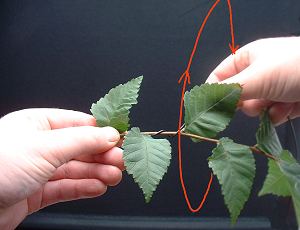
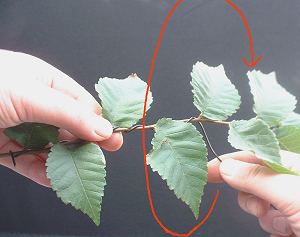
However, it is worth reiterating that
· Where possible the wire should be applied at a 45° to the direction of the branch that is to be wired
· Hold the beginning of the wire/anchor point firmly with your left hand at all times; as you coil the wire further down the branch, you can also move the position that you secure using this hand. At all times, the wire that has already been applied should not be able to move whilst you continue to wire the remainder of the branch.
· With the wire in your right hand, feed the wire through your thumb and first finger as you make a circling motion with your wrist around the branch, carefully work down the branch towards your body.
· You can either cut a length of wire approximately 1/3 longer than the branch you are wiring or as I prefer, you can keep the reel of wire in the palm of your hand and cut to length when you have reached the tip of the branch. Always wire from the base of the branch to the very tip.
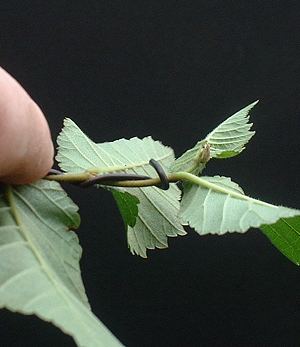
· The last turn of the wire should be at 90° to the direction of the branch to secure the end of the wire at the very tip.
· On fast growing species it can be worth wiring more loosely to reduce the risk of the wire cutting in.
· When wiring an entire tree, always start with the trunk, wire the primary branches and then the secondary branches.
.JPG)
The branches of a Juniper bonsai that have been recently repositioned using coiled wire.
· Bend branches slowly and steadily. Listen and watch for signs of the branch cracking and splitting. If it does, STOP! The thicker the branch, the more force that will be needed to bend and the less ‘elastic’ the wood. The branches of certain tree species are especially prone to splitting or snapping whatever their size.
· Learning which tree species have branches that are likely to snap rather than bend comes with experience. When wiring an unfamiliar species for the first time, test the tension of the branch with your finger prior to coiling the wire.
· Some species such as Acer palmatum ‘Kiyohime’, Azalea, Bougainvillea or Berberis are virtually impossible to bend to any real degree without the branches splitting. These can only be wired when branches are very young and haven’t ‘hardened off’.
· If possible, use your hands as a clamp holding the outside of the branch with your fingers, push and bend the branch from the inside of the curve with your thumbs. This gives firmer control whilst spreading the force of the bend around the outside of the branch where it is most likely to split.
· Bending branches at the point where they grow from the trunk can be hazardous; some species can be prone to ripping out of the trunk completely. Proceed with care.
· Allow the soil of trees to be wired to dry out slightly. With less water, the tree will be less turgid and more pliable.
· Be decisive. When a branch is bent into position do not keep returning to it and moving it, repeated bending can cause an unnecessary number of fractures in the branch, and so weakening it.
.JPG)
The same newly-wired Juniper, as seen from the side
Add realistic movement to your branches and trunks
· Make sharp bends at leaf joints and where secondary branches grow; this is where tree branches naturally have a change in direction. Bends made in the internodes don’t look as natural.
· Add movement so that secondary/sub branches are on the outside of the bend, not the inside.
· On deciduous species in particular, make sure you add movement to all straight sections of the branch.
· Don’t just create movement from left to right; make sure the branch also moves up and down as well.
Wiring does cause a degree of stress to a tree
· However if allowed time to recover without any further work being carried out, all bonsai respond well to wiring. Don’t wire unhealthy or weak trees as it will delay recovery.
It is often advised that when wiring the trunk of a tree, the start of the coil is anchored into the soil and roots of the tree. Personally I dislike this technique as the anchorage is poor and the wire will often move and disturb the roots as the coil around the upper trunk is made. Unless movement is absolutely necessary in the first few inches of the trunk, I would suggest keeping the entire coil of wire above soil level.
When to wire your tree
With the large number of tree species commonly used for bonsai and the wide variation of climates in which readers will be wiring, it is impossible to state exactly when your tree should be wired. There are also pros and cons of wiring at any particular time of the year with any particular type of bonsai. Theoretically, most tree species can be wired at most times of the year though trees wired during the Winter may need frost protection in certain climates.
I am therefore listing a number of factors that should be taken into consideration when deciding at which to wire your tree;
· The only time that wiring can negatively impact the health of your tree to a large degree is during Winter, in areas where temperatures regularly drop below -10°C/approx 15°F. In temperatures this cold, any fractures that have not healed will be exposed to the cold and possible future dieback of the branch. If your tree still carries wire at this time of year, give it frost protection below -10°C.
· In warmer climates, the best time to wire deciduous trees is just as the leaves fall in Autumn. With the branches bare it is much easier to wire and adjust the branches with a complete view of the tree. The branches should heal all but the largest cracks or severe bends before the tree becomes completely dormant for the Winter. I have been wiring my deciduous trees here in the UK (Zone9) in the Autumn for a number of years and they have suffered no setbacks, even without frost protection.
· Deciduous trees can be wired in Spring before the leaves open but great care must be taken that the new leaf or flower buds are not dislodged.
· Deciduous and broadleaf trees can be wired any time through the growing season but when in leaf it is more difficult to study the structure of the tree and wiring around the leaves is more difficult. Branches wired at this time; particularly new shoots, will heal very quickly. On fast growing species, keep checking every few days that the wire is not beginning to dig in.
· The second best time to wire deciduous trees is at midsummer after defoliating the tree. Again with the branches bare, wiring is clear and easy; the branches should take to their new positions before the end of Autumn.
· Coniferous species can be wired at any time from Spring through to Autumn. Coniferous species will continue to heal over Winter so can still be wired in Autumn. As the wire on Coniferous species needs to be on the branches for a longer period of time; often over Winter, frost protection is needed if temperatures drop below -10°C.
· Coniferous species need wiring annually and need at least one complete wiring of the entire tree for a successful design.
· Coniferous species are best wired (particularly if heavy bends are to be made) from late midsummer through to early Autumn. By late midsummer new growth will start to need wiring and will heal faster than at most other times of the year. Many species such as Pines will have also made most of their annual increase in branch thickness by August, wiring after this time will allow the wire to stay on the tree until the following year without cutting in and scarring the bark.
· Coniferous species can be wired in the Spring and this growth will set into position relatively quickly but will need reapplying as the years new growth appears. Any wire still on the tree by midsummer should be checked regularly to avoid wire scarring; particularly on Pines that swell suddenly around this time.
· Tropical species can be wired at virtually any time of the year as they are protected from frost and have little or no dormant period. The wire can cut in fast due to the typically vigorous growth of tropical species and must be checked very often.
Removing Bonsai Wire
As a tree grows, the branches very slowly increase in size. Any wire on the branches can become tight and as it does, mark the bark. In severe cases, the wire can cause coiling scars where the wire has bitten deep into the branch. Light marking will grow out within a year or two but heavy marking can be permanent. Wire marks are always considered ugly and should be avoided by removing the wire before it has a chance to dig into the bark.
It is always recommended that the wire be removed by cutting each turn with some wire cutters. Trying to unwind the wire can easily lead to dislodged buds, torn leaves or broken branches. However, there are many enthusiasts who do unwind their wire so it can be reused…….great care must be taken if doing so.
Don’t bother unwinding copper wire as it is not possible to remove kinks from it after use. I tend to reuse heavier, more expensive gauges of aluminum wire on my trees still in training (potentsai) but have learnt to my cost that it is rarely worth trying to unwind and reuse narrow gauge wire used for thin branches. These branches are the ones that tend to get damaged!